If your employer recently updated their benefits package, you may have heard the term "Lifestyle Spending Account", or LSA, floating around your benefits portal. An LSA isn't an HSA. It isn't an FSA. But it might be sitting in your benefits portal right now, waiting to be used on the gym membership, meditation app, or wellness product you've already been paying for out of pocket.
Here's a plain-English breakdown of what a Lifestyle Spending Account actually is, what it covers, how it compares to a Health Savings Account (HSA) or Flexible Spending Account (FSA), and the smartest way to stack all three to get more from your pre-tax benefits dollars.
What is a Lifestyle Spending Account?
A Lifestyle Spending Account (LSA) is an employer-funded benefit that gives employees a set allowance to spend on health, wellness, and lifestyle expenses. Think gym memberships, fitness classes, mental health apps, meal delivery, pet insurance, financial coaching, and more.
The key word is employer-funded. Unlike an HSA or FSA, which you fund yourself with pre-tax payroll contributions, an LSA is funded entirely by your employer. They put the money in; you spend it. What counts as an eligible LSA expense is defined by your employer, not the IRS.
That flexibility is both the appeal and the catch. An LSA can cover almost anything health- or lifestyle-related, but only if your employer decides it qualifies.
How is an LSA different from an HSA or FSA?
This is where most employees get confused. Here's a side-by-side comparison of Lifestyle Spending Accounts, Health Savings Accounts, and Flexible Spending Accounts.
LSA | HSA | FSA | |
Funded by | Employer | You, via pre-tax contributions (employer may also contribute) | You, via pre-tax payroll deductions (employer may also contribute) |
Tax benefit | Usually taxable income to you | Contributions, growth, and withdrawals are all tax-free | Contributions are pre-tax; reduces your taxable income |
What it covers | Employer-defined | IRS-defined eligible medical expenses | IRS-defined eligible medical expenses |
Rolls over? | Depends on employer | Yes, indefinitely | Usually no, up to $660 can roll over in 2026 |
You own it? | No, employer-funded and employer-controlled | Yes, portable, stays with you if you change jobs | No, tied to your employer; you forfeit unused funds if you leave |
The biggest difference between an LSA and your HSA/FSA: HSA and FSA dollars are yours. You contribute pre-tax money, the funds stay tied to you (especially with an HSA, which is fully portable), and you use them on IRS-approved medical expenses. LSA dollars come from your employer and are spent under their rules, not the IRS's.
That also means LSA spending is typically treated as taxable income. That said, certain categories like professional development and work-from-home expenses (think cell phone or internet reimbursements) are often treated as nontaxable business expenses. The tax treatment can vary depending on how your employer structures the benefit, so it's always worth confirming with a tax advisor.
What does a Lifestyle Spending Account cover?
Because each employer sets their own rules, eligible LSA expenses vary widely from company to company. Common LSA-eligible categories include:
- Fitness and movement: gym memberships, fitness classes, sports equipment, personal training, studio packages
- Mental health and wellness: meditation apps, therapy (when not covered by insurance), stress management programs
- Financial wellness: financial planning tools, coaching sessions, debt counseling
- Nutrition: meal kit deliveries, nutrition coaching, dietitian sessions
- Family and caregiving: dependent care, pet care, parenting resources
- Personal care and lifestyle: massages, ergonomic home office equipment, travel, hobby classes
Some employers keep the list tight and health-focused. Others go much broader. The best way to know what your LSA covers is to check your benefits portal or ask your HR team directly.
What an LSA doesn't cover and where HSA/FSA fills the gap
Here's something worth understanding: an LSA and an HSA or FSA aren't competing. They're designed to do different things, and together they cover significantly more than either one on its own.
LSAs shine for flexible, lifestyle-oriented spending. But they don't replace the value of pre-tax HSA/FSA dollars, which can be used on a specific range of IRS-eligible health and wellness products; including fitness equipment, wearables, women's health products, recovery tools, red light therapy, cold plunges, saunas, sleep products, supplements (with a Letter of Medical Necessity), and more. Because HSA/FSA spending uses pre-tax dollars, qualified shoppers can save an average of 30% on every eligible purchase.
If you have both an LSA and an HSA/FSA, you can use them together to cover more ground:
- LSA for your gym membership → HSA/FSA for physical therapy equipment or recovery tools
- LSA for a meditation app → HSA/FSA for a wearable that tracks your recovery and sleep
- LSA for personal training → HSA/FSA for fitness equipment at home
- LSA for a nutrition coach → HSA/FSA for supplements qualified by a Letter of Medical Necessity
JOON + Flex: your wellness benefits, all in one place
One of the platforms making Lifestyle Spending Accounts easier to use is JOON. JOON is the #1 LSA platform, used by hundreds of employers to offer fully customizable wellness benefits to their teams.
Instead of digging through reimbursement forms or juggling a handful of separate apps, JOON gives you one card-connected platform to spend your LSA across the categories that actually matter — wellness, fitness, mental health, food, family care, learning, and more. You swipe; it works.
You also get access to hundreds of premium brand discounts and a library of tools and content designed to help you feel and perform better, in and out of work.
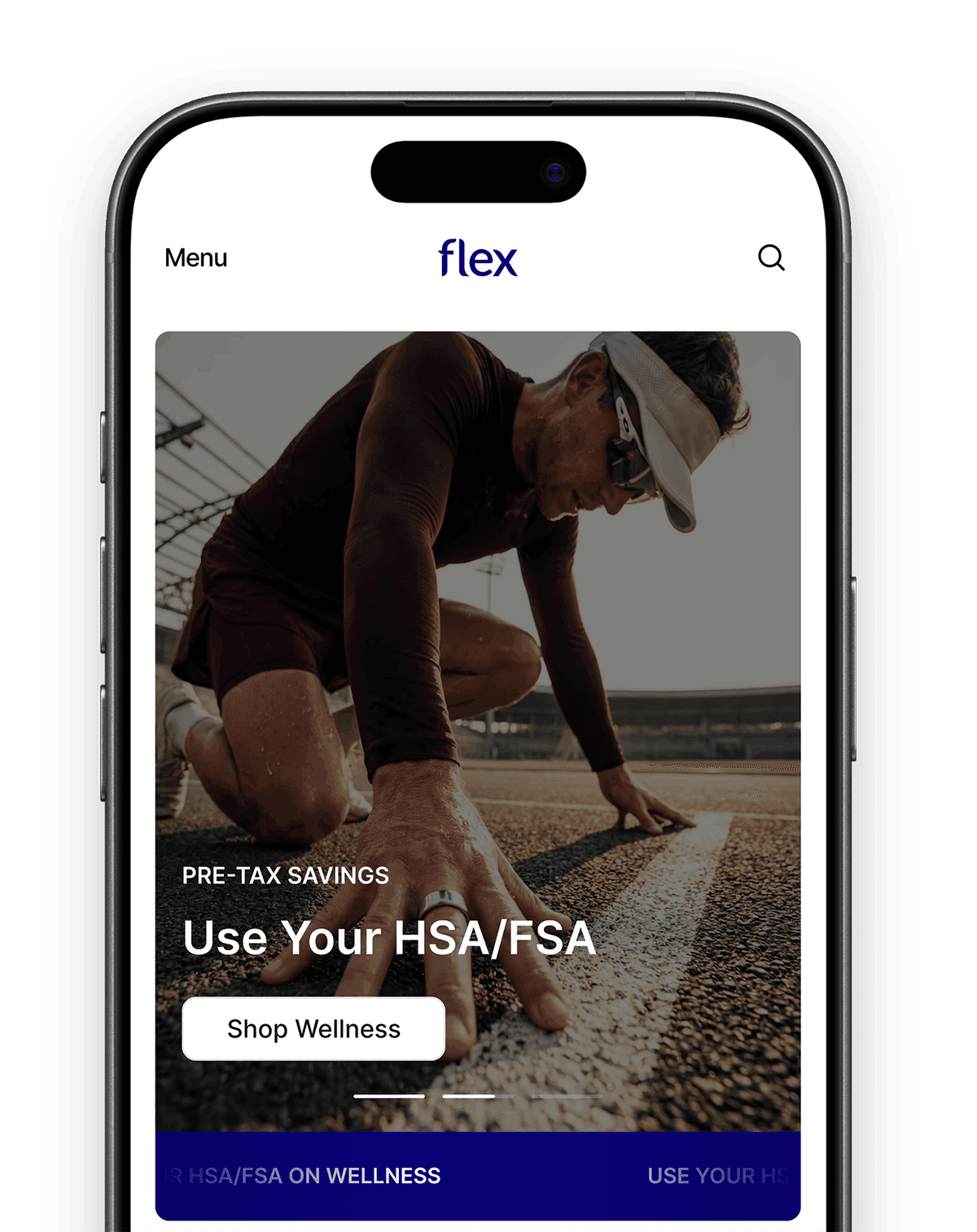
JOON recently partnered with Flex to embed HSA/FSA-eligible shopping directly into the platform. If your employer uses JOON, you now have access to both your employer-funded LSA and a full HSA/FSA-eligible marketplace in one place, making it easier than ever to put every dollar of your benefits to work.

How to make the most of your Lifestyle Spending Account
If you have an LSA, here's where to start:
- Find out what your LSA covers. Log into your benefits portal or ask HR for a list of eligible LSA expenses. You may be surprised by what's included.
- Check your LSA balance. Many Lifestyle Spending Accounts operate on a use-it-or-lose-it basis, similar to an FSA. Don't let the money expire.
- Stack your benefits. If you also have an HSA or FSA, decide which purchases make sense for each account. Use your LSA for employer-covered lifestyle expenses and your HSA/FSA for IRS-eligible health products.
- Shop smart with your pre-tax dollars. The Flex Marketplace is a great place to explore HSA/FSA-eligible products across fitness, personal care, women's health, supplements, recovery, and sleep.
- For employers: bring an LSA to your team. If you're interested in offering more flexible, customizable benefits to your team, explore JOON — the #1 LSA platform helping hundreds of employers build wellness and lifestyle benefits packages employees actually use and appreciate.
Your benefits are worth more than most people realize. The trick is knowing how to use them together.